
 One of the greatest Joys of being on the mission field is directly observing the effect of God’s Word on the hearts and minds of the people. In the past three Semesters, we have studied, verse by verse, the books of Jeremiah, Obadiah, Haggai, Malachi, Psalms, Joel, Amos, 1st Kings, Jonah, Ephesians, Jude, Colossians, Peter, Epistles of John, Philemon and Revelation. In addition, every new student is required to take a semester long class in Inductive Bible Study Techniques.
At the end of each semester, the Student/Pastors voluntarily provide their feedback. They are candid testimonies from those on the ground who are on the receiving end of this Ministry. As you read the below small sample of current testimonies as an indication of the eternal effect of planting God’s Word in people, we hope you will gain further insight into the ground level effect of this Discipleship Ministry on the Pastors of the Least. We trust you will be encouraged, and even challenged:
- Keep it up DSM! You are changing our nation. I am thankful to God for the opportunity to be here.
- This does not exist anywhere in Africa: a free Bible School for us slum Pastors! There is no school, no church, no ministry teaching the Truth we learn here.
- I changed from a man-pleaser to a God–pleaser. I am able to stand firm, even when threatened by death.
- The teachers and staff are well prepared, godly examples – like good fathers to us.
- Volunteering duties have taught me that ministry starts with serving from the bottom-up, not top-down.
- This ministry is God’s miracle in my life!
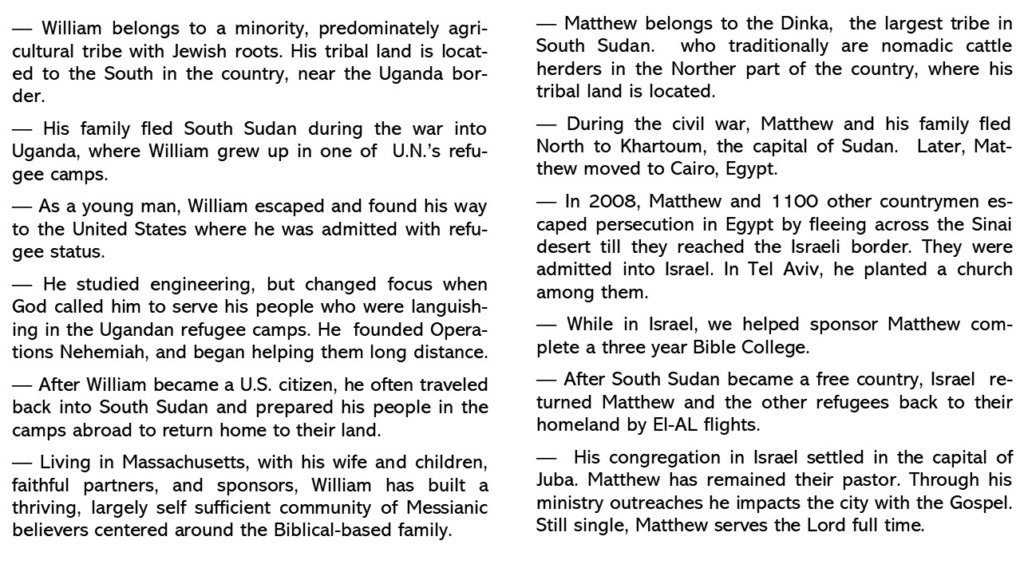
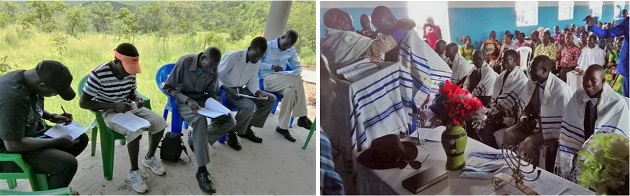
- Learning the Bible verse-by-verse, book-by-book is standard. Every member comes to church with a Bible, pen, and notebook, ready and enthusiastic about learning the Word.
- I do not know of anyone with such sincere love and care for slum Pastors.
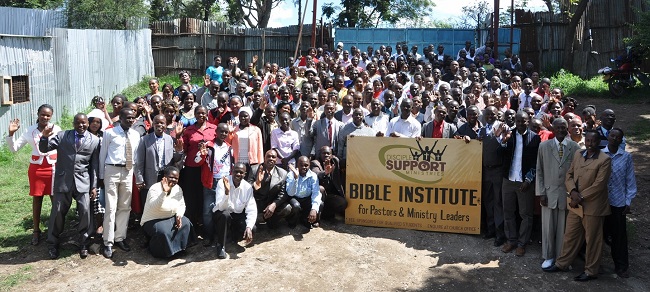
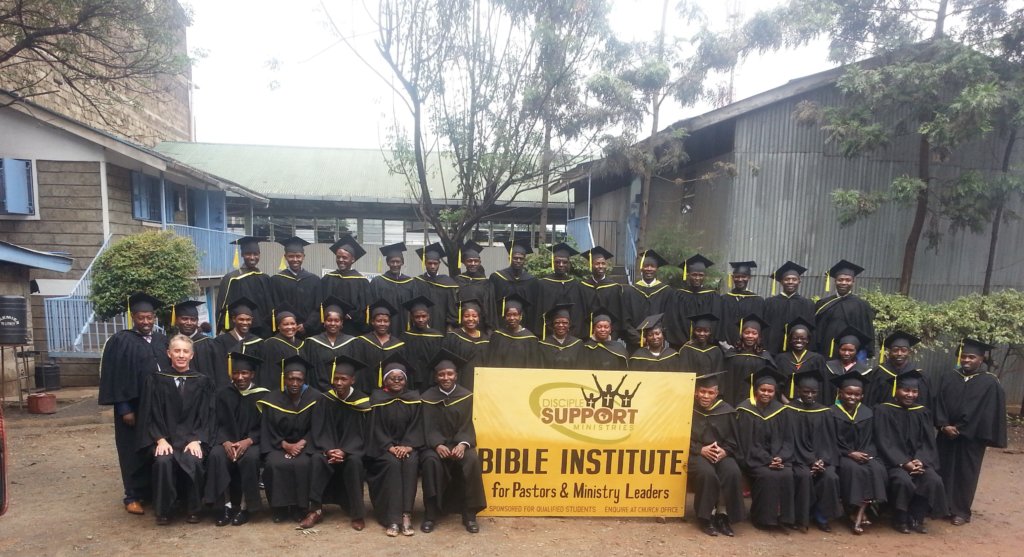
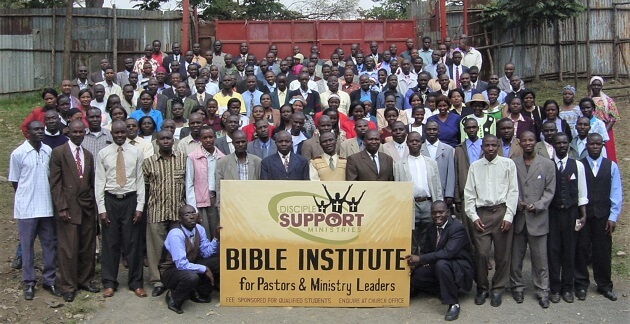 Disciple Support Ministries Bible Institute. The descriptive title of Bible Institute rather than Bible College is purposeful. We emphasize the Bible, above all other needful and necessary topics that one should learn as a Pastor or Ministry Leader. This allows us to focus on a growing gap in the church: Bible Literacy, which means being well-versed, familiar, comfortable and competent in fundamental Bible Theology, Exposition, Interpretation and Application. We do not teach topical classes, except one class on the Person and Work of the Holy Spirit, only books of the Bible: verse-by-verse, chapter-by-chapter, book-by-book.
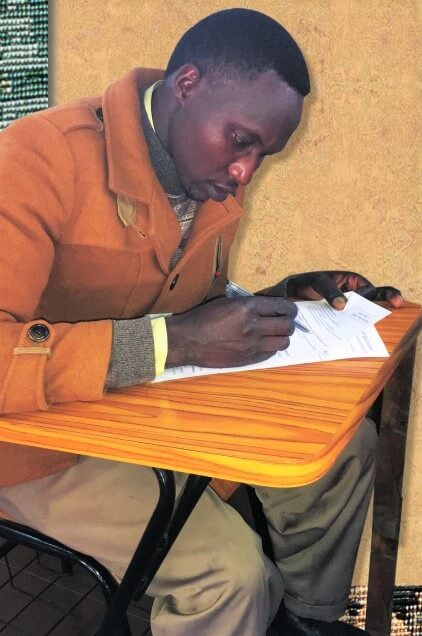 The curriculum is the 66 books. Overviews, Summations and Surveys are out. A Gospel is taught every year. Revelation is taught every other year; all other books in various combinations of Old and New Testament books each semester, but never skipping or overemphasizing any book. The goal is to present the whole counsel of God as God presented it to mankind: unadulterated, undigested, uninfluenced by commentaries, denominational biases or personal preferences. In this manner we seek to fill the gap, rather than duplicate, what is already available in other teaching ministries in East Africa.
The program is distinctively limited to Pastors and Ministry Leaders, to garner the most influence and effect throughout the Body of Christ. If we can reach church leaders, the fruit will multiply far beyond the confines of the Bible Institute and the city of Nairobi. Another distinction is our focus on those who live and minister in the urban slums. The city of Nairobi has approximately 5,000,000 residents. Of those, 65% live in slums. To reach most people, you need to go where they are. Unlike any others, our two Bible Institutes are inside the slums, filling a significant gap. This is where most of our people live.
Finally, it is a Discipleship program. The goal is to make Disciples, not Bible scholars. And it is this distinctive that creates the greatest challenges.
 If we just taught the Word of God at the Bible Institute, but did not require Change, we would simply be producing hearers, fat sheep, filled with the Word, but never exercising it. Likewise, if we just enforce rules, but do not teach the Word of God, we simply produce religious robots. And if we fixate on the numbers, whether salvations or graduates, we are fooling no one but ourselves. There must be a simultaneous emphasis on Hearing the Word from God, and then Doing what is Pleasing unto God. Holding Pastors and Ministry Leaders in a Bible Institute accountable should be the norm, not the exception. Sanctification is a work of the Holy Spirit, but the Method of Ministry must follow in the Steps of Jesus: how He proclaimed the Word, how He discipled, how He lead by example, and how He never accommodated Sin. It isn’t always popular. But as our Pastors testify…it works!
The vast majority of our Pastors and Ministry Leaders are working Pastors. They work secular jobs full time to support their families, and their ministries. Full time work in Kenya is typically 5½ days per week. To come to the Bible Institute, they sacrifice a full or half day of work’s pay. That’s significant. It means a drastic reduction in the family’s provision, requiring a profound Step of Faith. I consider myself privileged to walk among such current day Heroes of the Faith.
 Many first arrive at Bible Institute without secular provision, as they are encouraged, if not required, by their Bishops/Sr. Pastors, to prove their faith by quitting all secular work. This allegedly is a “step of faith” and proves they are “trusting God” for their provision. The result: most end in the terrible grip of destitution, subjecting their families to self-inflicted suffering. Eventually, many of these pastors “living by faith” morph into master manipulators, prosperity pimps and abusive hirelings that relentlessly beat the sheep for tithes and offerings. The fruit of disobeying God’s Word is always bad. Every time. It is only through the Holy Spirit, and the ministry of God’s Word, that our Pastors are set free. God’s explicit command is for men to work. God requires work by all able bodied men. It is not optional.
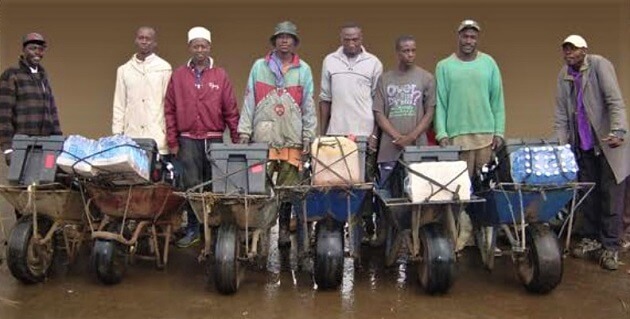
In Nairobi, it is nearly impossible to find formal employment. But the informal sector provides many work opportunities. Even within the massive urban slums, there is an ongoing economy. Buying, selling, trading and transactions of every sort go on daily. In the Kibera slum, with over 1,000,000 residents, there are thousands of shops, stalls, skills and services engaged in meeting the daily needs of the residents. And therein lay the opportunity for the Pastors and Ministry Leaders to lead the way.
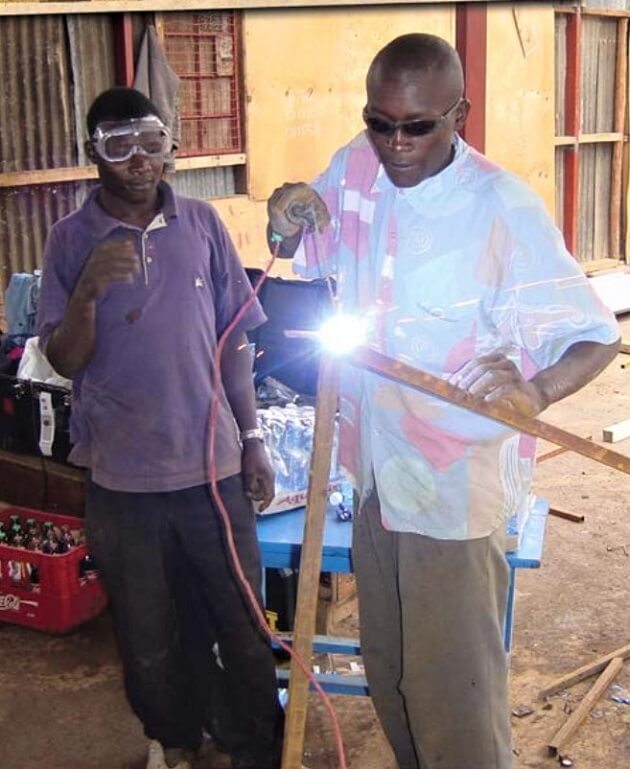
The fruit is glorious by every measure. Over the many years of ministry, hundreds upon hundreds of Pastors and Ministry Leaders have been led into Obedience, and consequently, Blessings from God. We now have Pastors who represent every trade imaginable—welders, mechanics, shopkeepers, painters, drivers, security guards, plumbers, teachers, gardeners, traders, farmers, recyclers, cooks, cleaners, construction workers, tailors, and yes, even carpenters—just like Jesus!
 One of the great scandals of the church these days is prevalent sexual immorality, especially involving church leaders! Four years ago, we implemented a new requirement. To graduate, you must confirm that the one you are living with is your legal spouse. Married in the eyes of God and man. Of course, we have exceptions for those few who are single, widowed or have exceptional situations. In my view, it was scandalous that we even had to implement such a rule. But the reality on the ground demanded it. Too many testimonies outside were reaching my ears: Pastors and Ministry Leaders going through the motions of the Discipleship, but living another reality. Year after year there was little change of hearts. By withholding Diplomas, we certainly got everyone’s attention! Good testimonies abound. Marriages restored. Families reconciled. Children “in submission with all reverence.” (1. Tim 3:4) Testimonies in the church, in the community, and at the attorney general’s office where marriage certificates are produced. The goal: to be conformed into the image of Christ!
FROM R.K.’S CORNER
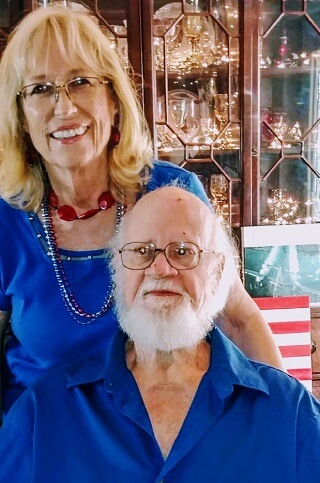 Paul and Marcia Cowley need no introduction to our longstanding partners and friends. We have followed them for almost twenty years since they as newlyweds gave up a prosperous life in South Florida, sold their home and business, then headed with a few belongings into the unknown— to the most extreme of all places: Nairobi, capital of Kenya, where 2.5 million slum dwellers live in squalor — 65% of the population! “Who will I send and who will go”? The question echoed in Paul’s heart while the visiting missionary described the ignorance, poverty and lack of knowledge of Biblical truth among these slum Pastors. Paul heard God’s call, and responded, “I am here, I will go.”
Without any preset curriculum, administrative manual, or any other tools—only with the Bible in hand, he simply gathered hungry men and women who were willing to sit under the influence of the teaching of the Word of God. He watched how the lives of the poorest of the poor—the Pastors of the Least, their families and communities, be transformed by the Power of the pure Word of God. His report from the Bible Institute is awe-inspiring, humbling, and challenging!
Will you join the ranks and help sponsor the Cowleys and the ministry their Pastors?



 Today, those of us who publicly confess and openly live out our faith in Jesus Christ as His disciples in the midst of our contemporary society saturated by atheism, secular humanism, anti-Christian “activism” and political correctness, may be tempted to get discouraged. It’s difficult to follow Christ, even in our private lives. Acting Christ-like in public will typically get you a strange stare, if not outright ridicule or arrest. Use the name of “Jesus” and you’ll be risking a riot.
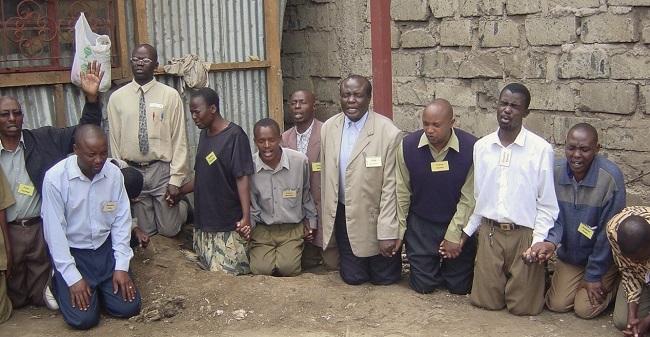
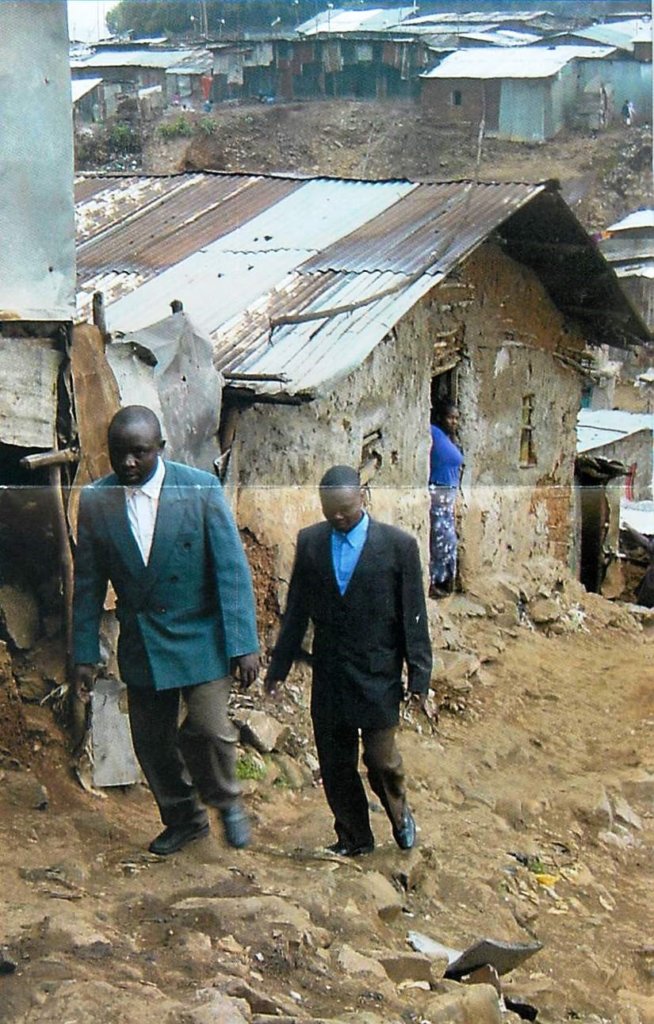 In the slums, this great Spiritual Conflict is readily apparent. The Pastors of the slums confront such contradictions daily. If they faithfully follow Christ, they contravene much of the common Culture. Poverty has as culture of its own, seeped in deceit, dependency and vicious competition. In extreme poverty, things that would normally assault our spiritual senses quickly become “culturally acceptable” and are swept under the carpet of carnal convenience.
 Our Pastors minister in conditions of extreme material poverty, yet God still requires them to rise to the occasion as representatives of Christ.
 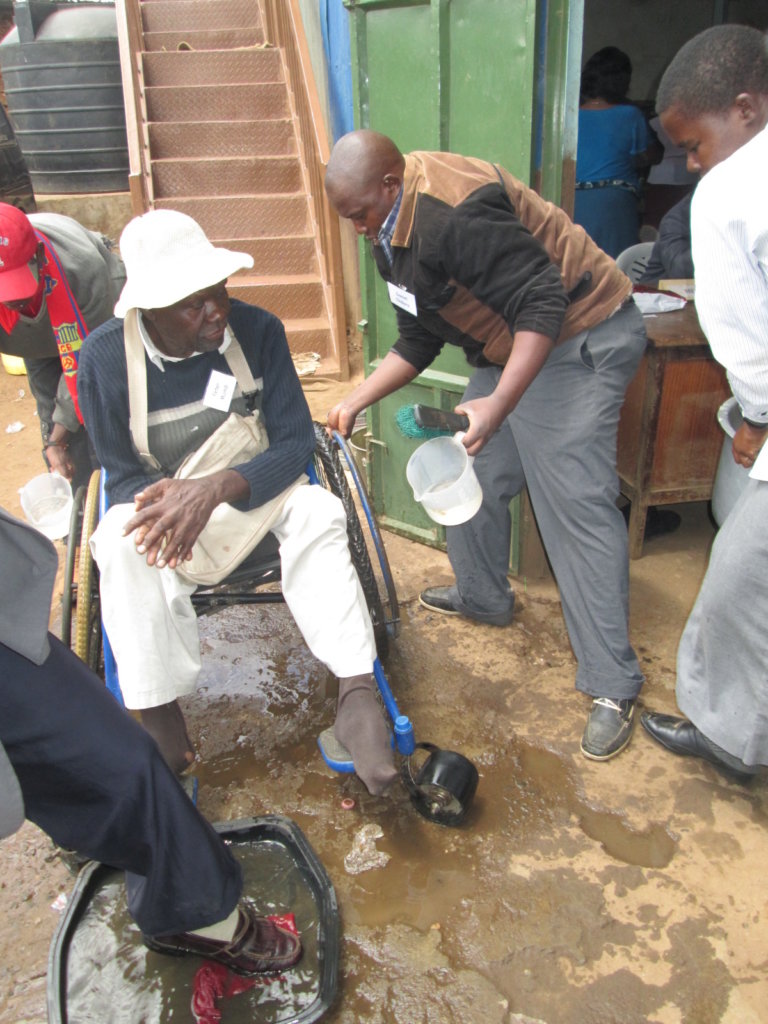 The man in the wheelchair is Peter. He has no use of his legs, and limited use of only one hand since birth. He has lived a life of being shunned. He learned to read and write at home, because no school would accept him as a child. He attends a popular church, but due to his infirmity, they will not let him do more than attend the church and receive his tithes. He is not permitted to serve in any capacity, due solely to his visible disability. He lives in a neighborhood that is not his tribal community, because he has been rejected by his own family and his clan. He lives among the poorest of the poor in a place that is the very bottom of the slum housing hierarchy. He knows what it means to be “outside the camp. He was “outside the camp” and that is where Jesus expects us to minister.
 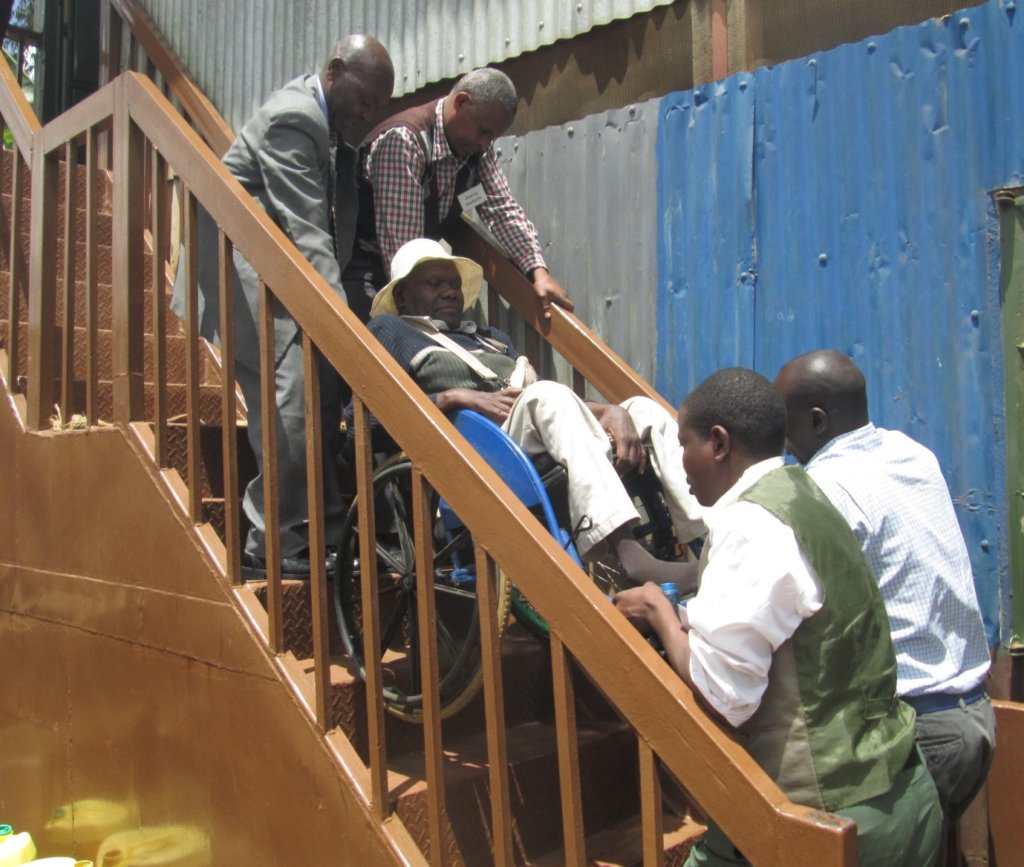 The Pastors welcomed Peter heartily! They greeted him with the genuine and sincere enthusiasm I would expect from a Christian, but would not expect from the Culture. They then did what Jesus would do, they washed not just his feet, but his mud encrusted wheelchair! They carried him up the steep and narrow Bible School steps in his wheelchair. They carried him down at every break, and back up, again. It takes four grown men much effort to do so. And then they pushed, pulled and mostly carried him every step of the muddy way back to his shack in the worst corner of the slum.
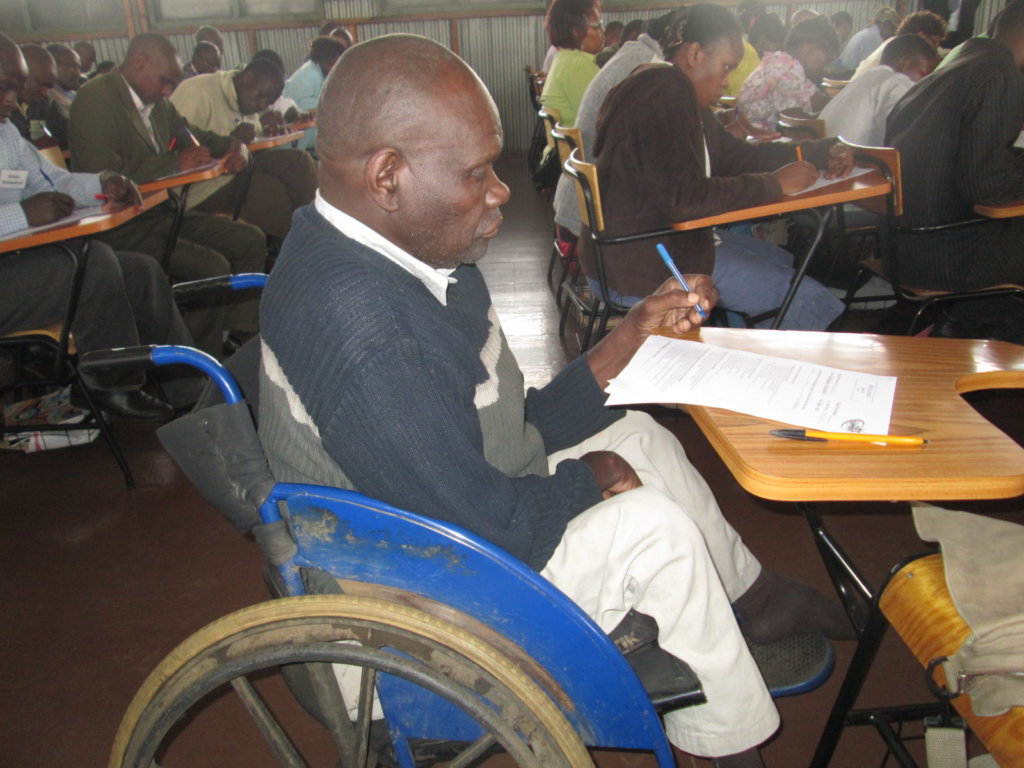 In the final analysis, it just doesn’t matter what is going on around us the depravity, the antagonism, the opposition or discouragements of the current Culture. When in doubt, just do what Jesus did. Wash feet. But not just any tidy, acceptable or obvious feet nearby. Even “culturally-relevant” do-gooders do that much.
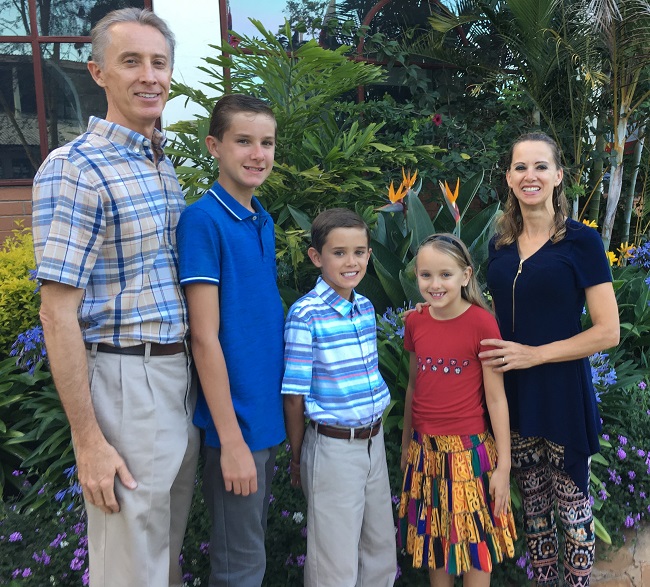
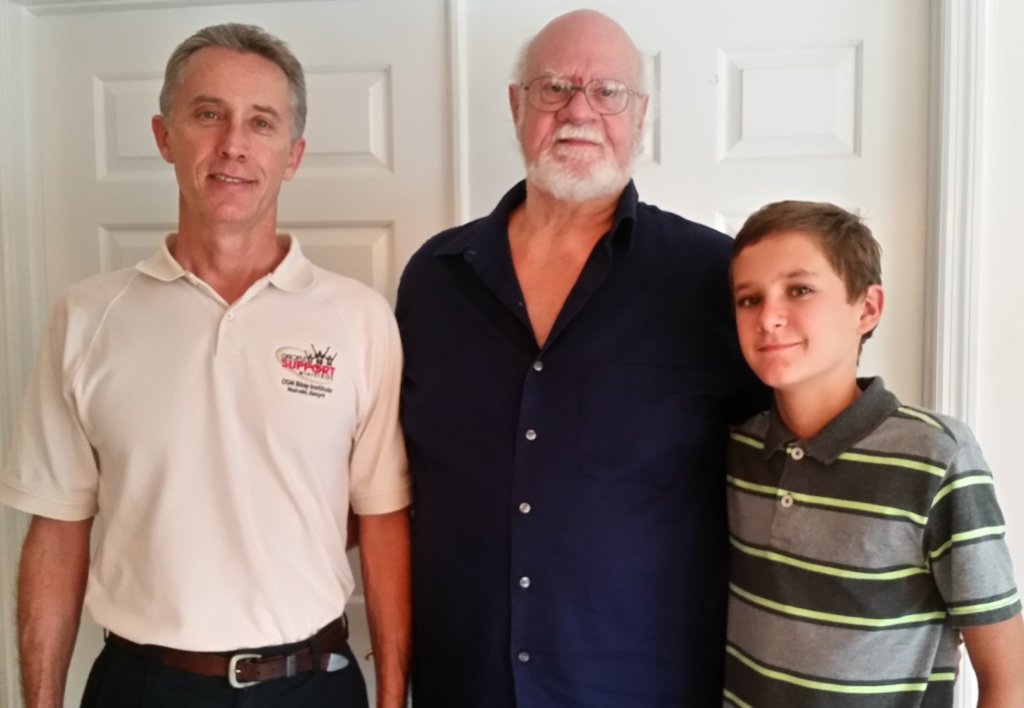
 Last week, Steve and I had a delightful visit from Kenya by Paul Cowley and his 14 year old son, Isaac. Paul gave us updates from the mission field where he, with his wife, Marcia, and their three children, have served among the poorest of the poor.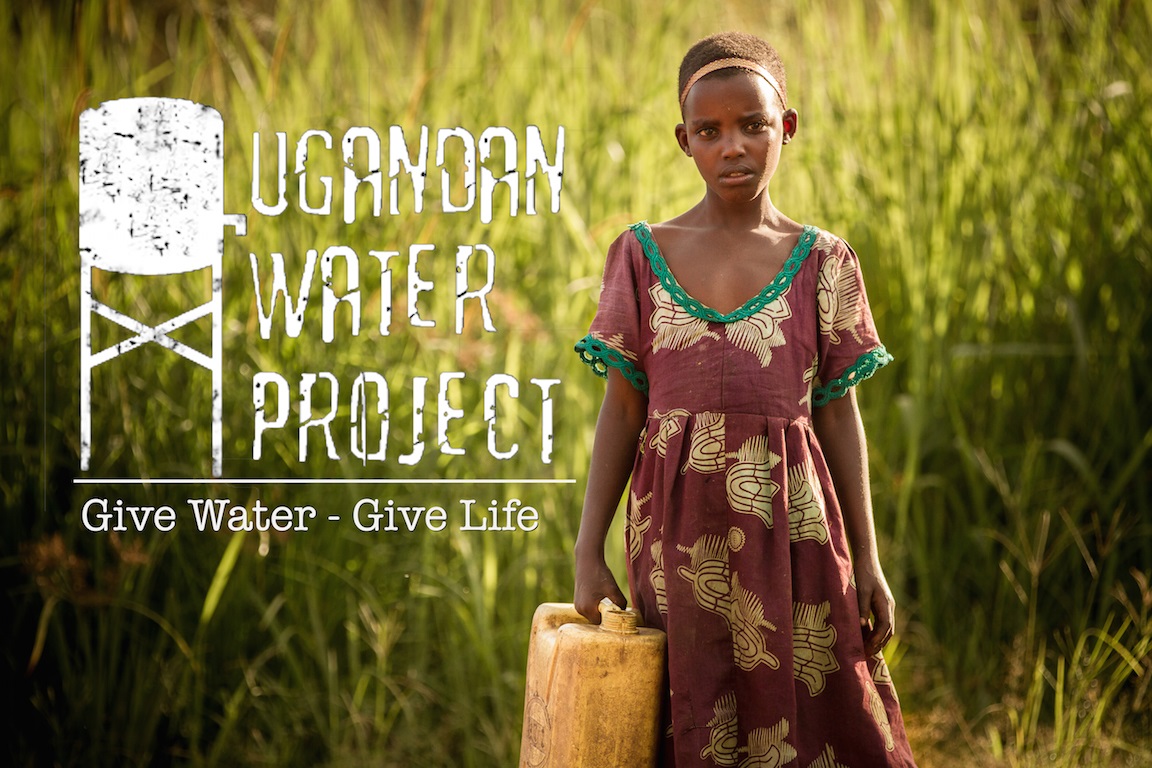
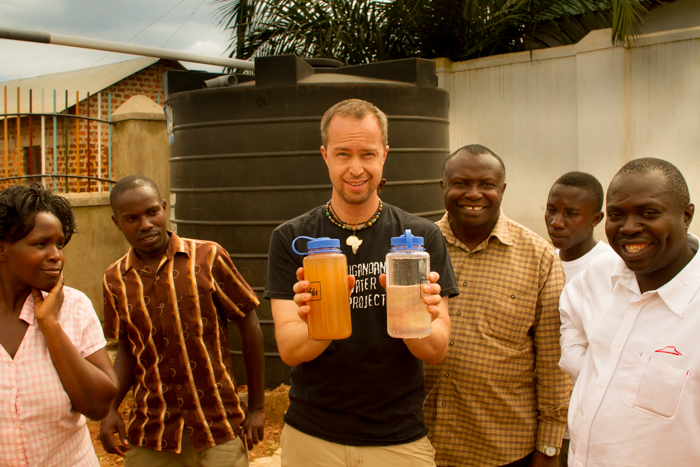 That first encounter left me productively disturbed. In August of 2008, after a year of learning, planning, and fundraising – five friends and I traveled to Uganda and saw the first two Rainwater Collection Systems installed on rural churches in Uganda, marking the beginning of the Ugandan Water Project. Since those first projects, we have continued to grow. The Ugandan Water Project now works in over 350 communities and has brought clean water to more than 155,000 people.
 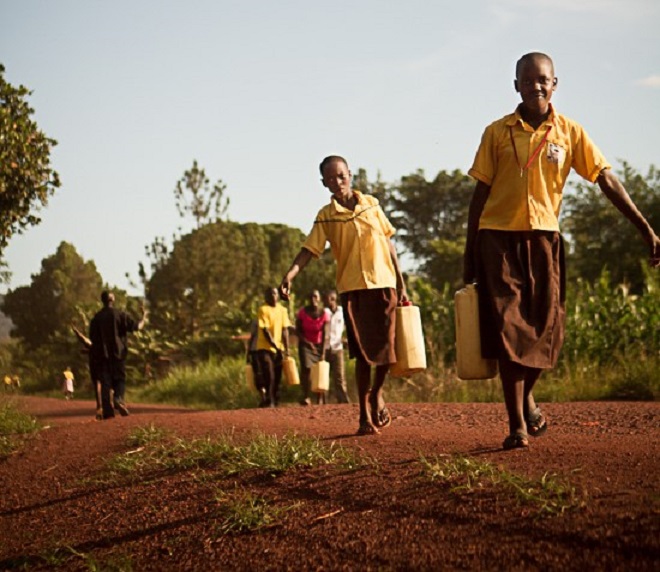 UWP employs a staff of 13 in Uganda (mostly Ugandan nationals) where we implement 3 primary solutions: Rainwater Collection Systems, Borehole Well Rehabilitation, and Water Filter Distribution. Sanitation and hygiene projects are beginning to take a larger role as well. Our projects focus on strengthening communities by resourcing schools, churches, clinics, and other foundational centers of local life.
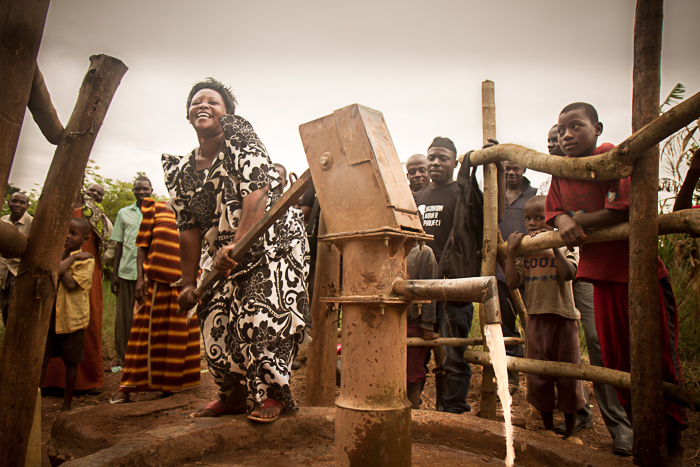 The past ten years has been harder than I would have ever guessed, but from where we stand now, I believe the future impact we will have, is greater than we can imagine. Our vision rings louder and resonates deeper than when we first began:
 One of the great opportunities the Ugandan Water Project saw from the start, was the opportunity to partner with schools and colleges. Anchored to the cause of clean water for Ugandans, and driven by the values at the center of our Christian faith – we knew that service, self-sacrifice, compassion and other themes would resonate even in environments where incorporated Christianity isn’t welcome.
  College campuses have been another arena for amazing impact. Water:Now is an event built on the assumption that God has designed us with far more capacity and power than we realize and that if a person could catch a glimpse of their real God-given-potential it could change their life. UWP partners with Christian student groups to host an evening on campus where clubs, organizations, teams, Greek life, and the general student body are invited to come learn about UWP and change the world. When students arrive, they are invited to participate in the audacious challenge to fund a water project for a specific school in Uganda ($3,000-$5,000) . . . in 1 hour. The result is something between a flash mob and a telethon. As the timer counts down, students reach out through various platforms to ask friends and family to make right-now-donations. It often comes down to the very last seconds, but to-date, the goal has been met, every time! The final challenge comes amidst celebration – reminding students that they have 24 hours in every day and now that they have seen what they could do with just one – dream new dreams and take bold action to change this world for the better.
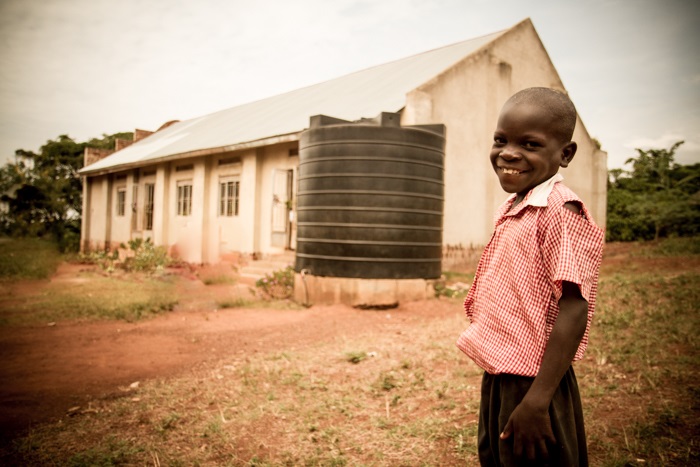 One example of this is the evolution of UWP’s Rainwater Collection Systems. These projects began as simple plastic tanks fed by gutters from community buildings. Declaring the slogan, “Always Learning!” the staff and volunteers began step by step isolating and improving each part of the process – solving problems, updating materials, investing in training, purchasing tools, and above all, learning from others around the world. The result is that today’s Rainwater Collection Systems are recognized as the best available version in Uganda.
 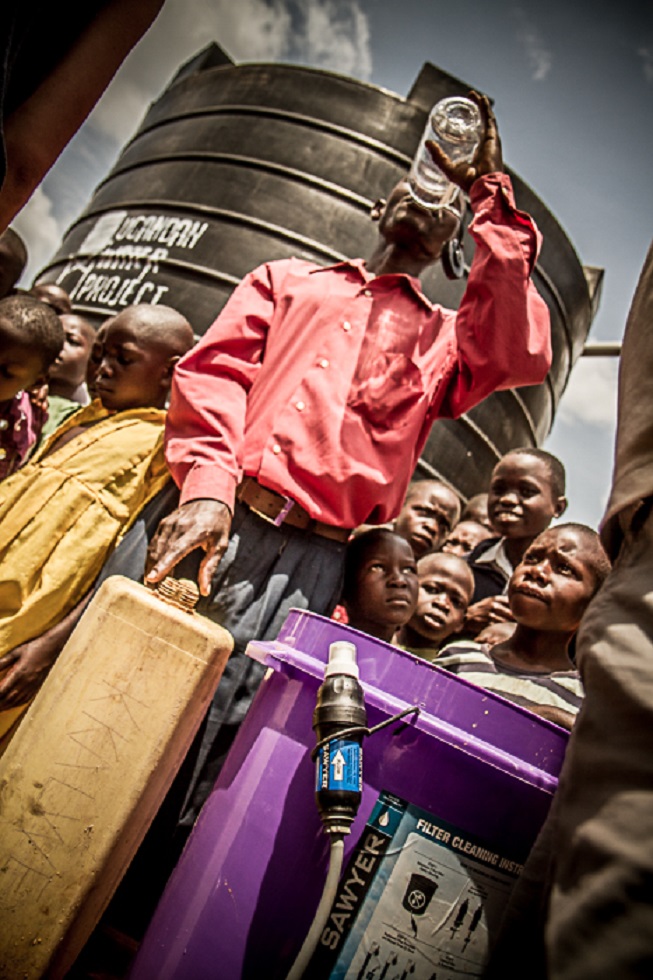 The organization committed 18 months of research and design to their M&E strategy and in May of 2016 launched a cloud-based set of data tools with partner, mWater. Now the organization tracks various indicators and can see proof that clean water in a community increase the number of girls in school; and that clean water at a school increases test scores dramatically. They can also prove that church growth directly correlates with a church bringing clean water to their community.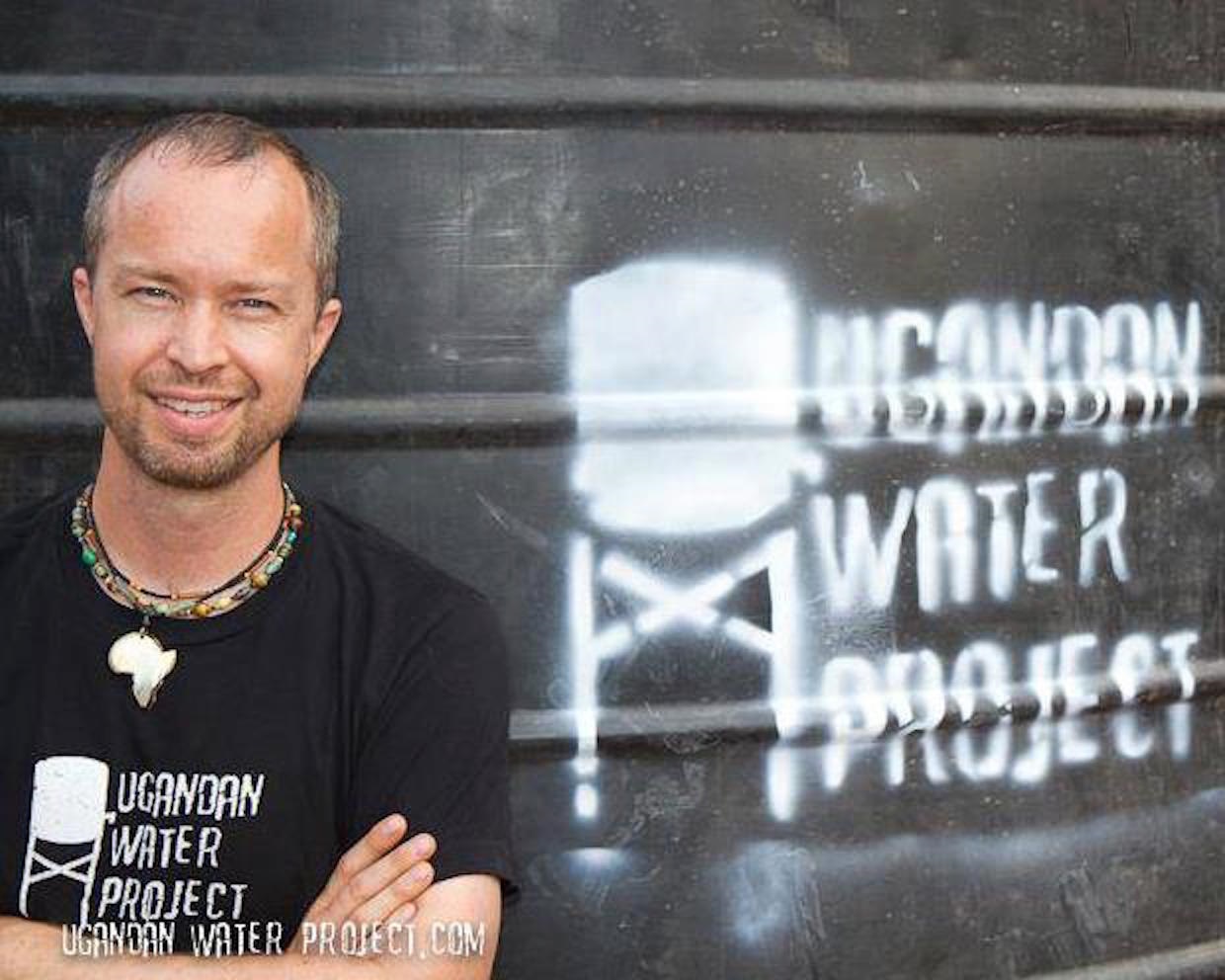
 The first time I laid eyes on James Harrington was in 1975. I had just moved to Upstate New York where I had helped establish and administrated a private elementary/junior high school in the Ithaca area. James was then a newborn, son of one of my colleagues at the school. I watched him grow up during his early boyhood. In his mid twenties he married Christy, a businesswoman in her own right, and together, they have raised three beautiful daughters; the oldest is now 18.